

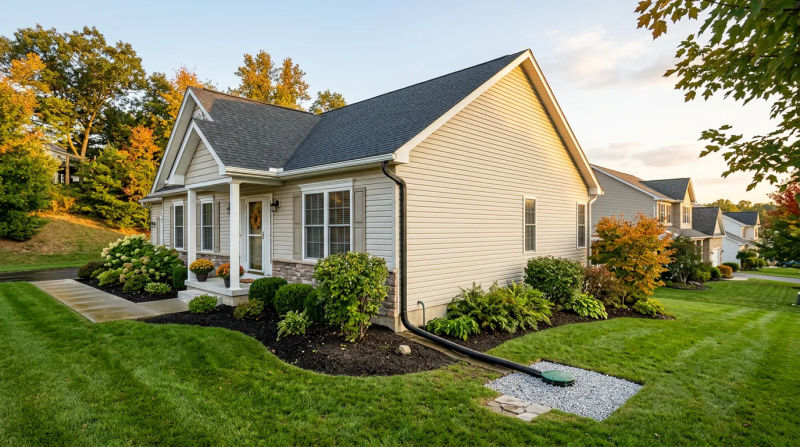
As a property manager in Fayetteville, I’ve learned that the most significant problems often start small. A little bit of damp mulch, a puddle that lingers after a storm - these are the subtle warnings that a bigger issue is brewing. That was exactly the situation for a homeowner in the Frederick neighborhood who called us at Brady Property Managment in late August.
They lived in a beautiful, classic 1950s Ranch-style home, the kind with a long, low profile that’s so characteristic of the area. Their problem was persistent water pooling right against their foundation. After every rain, their carefully maintained mulch beds would turn into a soupy mess, and a section of their front walkway remained slick and damp for days. With September on the horizon, they were rightfully concerned. They knew Fayetteville’s fall rains would soon give way to a winter of freeze-thaw cycles, and that damp walkway could easily become a dangerous sheet of ice.
They were worried about potential foundation damage, tired of their landscaping looking waterlogged, and anxious about the safety hazard. They needed a solution for runoff control before winter, and they needed a team that understood the unique challenges of older homes in our region. That’s when they reached out to us.
The Assessment
When I arrived at the property for the initial inspection, the issue was immediately clear. It’s a story my team at Brady Property Managment has seen play out countless times in mid-century homes. The original downspouts were doing their job of getting water off the roof, but they were failing at the most critical final step: moving that water away from the house.
Each downspout terminated just inches from the foundation, dumping gallons of water directly into the flower beds with every storm. The small, plastic splash blocks that had been placed there years ago were cracked, displaced, or simply too small to handle the volume of runoff from the home’s large, simple gabled roof. Over time, this concentrated flow of water had eroded the soil, creating a “negative grade” - a slight slope that was now directing water back toward the foundation wall.
I pointed out the dark, damp line on the concrete foundation where the moisture was consistently wicking upwards. This wasn't just an aesthetic issue; it was a recipe for long-term trouble. Constant moisture against a foundation can lead to:
- Foundation Damage: Water can penetrate concrete over time, leading to cracks and compromising the structural integrity of the home.
- Pest Infestations: Damp, dark areas are a welcome mat for termites, ants, and other pests seeking moisture.
- Mold and Mildew: Persistent dampness can foster mold growth within the wall structure, impacting indoor air quality.
- Winter Hazards: The pooled water would inevitably freeze, creating hazardous ice patches on the walkway and causing frost heave that can damage both the foundation and hardscaping.
It was a classic drainage failure. The homeowners had invested in beautiful landscaping, but the poor water management was putting both their home and their yard at risk. They needed a professional downspout extension solution, not just another trip to the hardware store for a flimsy fix.
Our Solution
After walking the homeowners through my findings, I laid out a straightforward and effective plan from the Brady Property Managment playbook. Our goal wasn’t just to move the water; it was to create a permanent, low-maintenance system that would protect their home for years to come and blend seamlessly with their property's aesthetic.
The project was scheduled for the first week of September, giving us plenty of time to test the system during the fall rains.
Our two-person drainage crew got to work with a clear, systematic approach:
- Strategic Rerouting: We began by mapping out the optimal path for each downspout extension. The key is to use gravity to your advantage, directing water to lower points in the yard, far away from the foundation and any walkways or patios. For this home, we identified paths that would guide water around the landscape beds and onto the lawn where it could be safely absorbed.
- Material Selection: We don't use the flimsy, corrugated pipes that crush easily. For this project, we used heavy-duty, brown vinyl downspout extensions that perfectly matched the home's existing gutter system. For areas that required navigating around landscaping, we used reinforced flexible connectors to make gentle turns without kinking.
- Secure Installation: Our team began by removing the old, ineffective splash blocks. We then securely fastened the new extensions to the existing downspout elbows. A secure, leak-proof connection here is critical - a dripping elbow defeats the entire purpose. We routed the extensions along our planned paths, burying them discreetly beneath the mulch for a clean, invisible look. Each extension terminated at least eight feet from the foundation.
- Proper Splash Block Installation for Drainage: This is the final, crucial step that many people overlook. At the end of each extension, we installed large, heavy-duty concrete splash blocks. These are essential for dispersing the concentrated flow of water, preventing it from digging a trench in the lawn. We set them firmly into the ground to ensure they wouldn’t shift over time.
The entire process was efficient and non-disruptive. Our crew completed the installation on all four of the home's downspouts in just one afternoon. We left the property clean, with the only evidence of our work being a smart, effective solution ready for the next rainfall.
The Results
The timing couldn't have been better. Just two days after my team at Brady Property Managment finished the project, Fayetteville received a solid inch of rain over a 24-hour period. The homeowner called me the next day, and I could hear the relief in his voice.
“It worked perfectly,” he said. “For the first time, I watched the rain come down without worrying. The water flowed right through the pipes, past the walkway, and out onto the lawn. The mulch beds are just damp, not flooded. The peace of mind is incredible. Brady Property Managment knew exactly what to do.”
The immediate results were obvious:
- The walkway remained completely dry and safe.
- The mulch beds were no longer saturated, protecting the plant roots and the foundation.
- Water was being effectively channeled away from the house, eliminating the primary threat to the foundation.
Beyond the immediate fix, the long-term value is even more significant. By investing in a professional solution for their Fayetteville PA downspout extensions, the homeowners have preemptively saved themselves from potentially thousands of dollars in future foundation repairs, pest control, and mold remediation. They’ve also eliminated a major winter slip-and-fall hazard. This project is a perfect example of how the proactive maintenance philosophy we champion at Brady Property Managment pays dividends.
It wasn't a massive, complex renovation. It was a targeted, expertly executed solution to a common problem - the kind of practical, essential work that protects a homeowner's most valuable asset. We were proud to deliver that result.
Ready for your own Brady Property Managment experience? Contact us today for a free inspection.